A little more attention to the everyday
Food. Supplements.
A thoughtful place to start.
Welcome to Cell-U-Rite Naturals USA.
Make room for careful reading, familiar ingredients, and better questions about the details on a label.
01 / First, understand the difference
Food & supplements:
two different conversations.
Begin with the food itself.
A food description starts with something familiar: an ingredient, a way of preparing it, or a place in a meal. Reading about food becomes more useful when you keep that context in view. A single ingredient name does not describe a whole day of eating, and a photograph cannot explain the portion or preparation behind it.
Give the ordinary details some attention. Notice what a recipe or description actually includes, what it leaves open, and whether it suits the question you came to answer. The aim here is thoughtful reading, with enough room to distinguish an observation from a promise.
Then look closely at the formulation.
A supplement description asks for another kind of attention. The named ingredient, the form, and the stated amount are separate details. Keep them together in your notes. An appealing name is a starting point for investigation, rather than a complete description of what is inside.
Published material may introduce unfamiliar terms or confident claims. Pause at those points. Identify the specific statement, look for its context, and record what you still need to understand. For personal decisions, bring the actual information to a qualified professional who can consider your circumstances.
02 / Familiar ingredients, closer attention
A few things on the counter.
Fresh, frozen, or part of a prepared food: the same familiar name can appear in different settings. Read the whole description before treating the name as the complete picture.
An everyday ingredient makes a useful reminder to notice preparation and accompanying ingredients. Ask what is being described, and how specific the information really is.
Colour and freshness give a photograph its character. They do not establish the properties of a product or replace the information needed to evaluate a written claim.
03 / Take a question with you
A shorter list.
A clearer conversation.
When something catches your attention, turn it into a question you can return to. Keep the original wording nearby so that the context stays intact.
- What exactly is the ingredient or formulation being discussed?
- Which amount and serving size does the description use?
- What information supports the statement, and what remains unclear?
- What would I need to ask before making a personal decision?
04 / Continue reading
Follow your curiosity.
Explore the archives or open a published page. Read product-titled articles with the same attention you would give any other source: note the details, the context, and the questions that remain.
Keep asking
A few useful questions.
What is Cell-U-Rite Naturals USA?
Cell-U-Rite Naturals USA is the identity of this food and dietary supplement website. This homepage introduces ways to approach the reading: distinguish a food from a supplement, look closely at a label, and keep useful questions. The Blog and Other sections provide entry points to the published material.
Where should I start reading?
Start with the Blog for a broad view of published topics, or explore Other when you want to browse further. Choose a subject that answers a specific question, then read the full article. A headline is only an introduction; the details and limits of a claim deserve equal attention.
How should I compare two supplement descriptions?
Begin with the named ingredients, the amount stated for a serving, and the serving size itself. Keep those details together when comparing descriptions. Similar product names or attractive imagery do not establish that two formulations are equivalent. Record unclear wording as a question rather than filling in missing information yourself.
Does a natural ingredient tell me everything I need to know?
No. The word natural does not describe every aspect of an ingredient, a formulation, or its suitability for an individual. Read the specific ingredient names and accompanying information. When a decision involves your own health, take the actual label and your questions to an appropriately qualified professional.
Are the foods pictured here products for sale?
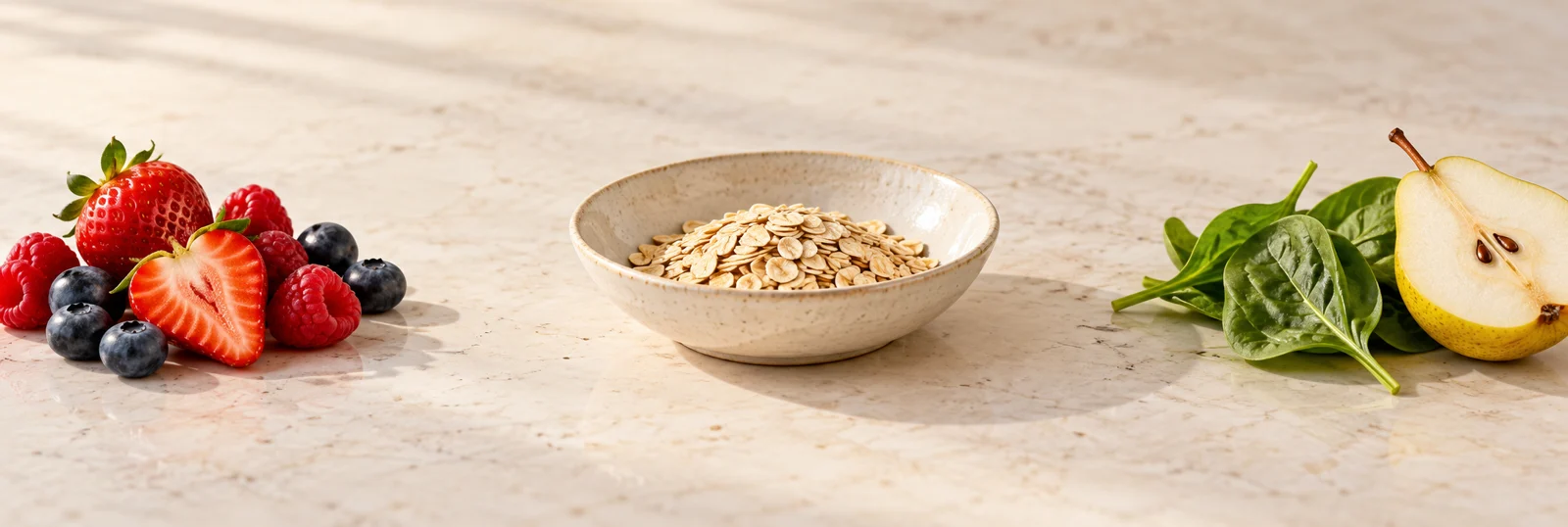
No. The food still life is an illustrative image used to introduce the subject of everyday food and nutrition reading. It does not show a verified product range, a meal recommendation, or an orderable collection. Use the linked articles as reading material rather than as a statement of stock.
Why does serving size matter when reading a label?
Serving size gives context to the amounts listed beside it. Before comparing two labels, check whether each quantity refers to the same amount of food or the same number of tablets, capsules, or other units. Copy the serving information alongside the ingredient amount so that your notes remain clear.
Can an article answer my personal nutrition questions?
An article can introduce terminology and help you form more precise questions, but it does not know your personal circumstances. Keep general reading separate from decisions about your own care. A qualified professional can discuss the details that a public article cannot assess, including information you bring from a label.
What should I save for a follow-up conversation?
Save the article title, the question it raised, and the exact label wording you want to understand. If you are comparing items, keep their serving information together. A short set of specific questions is easier to discuss than a collection of broad claims copied without their original context.